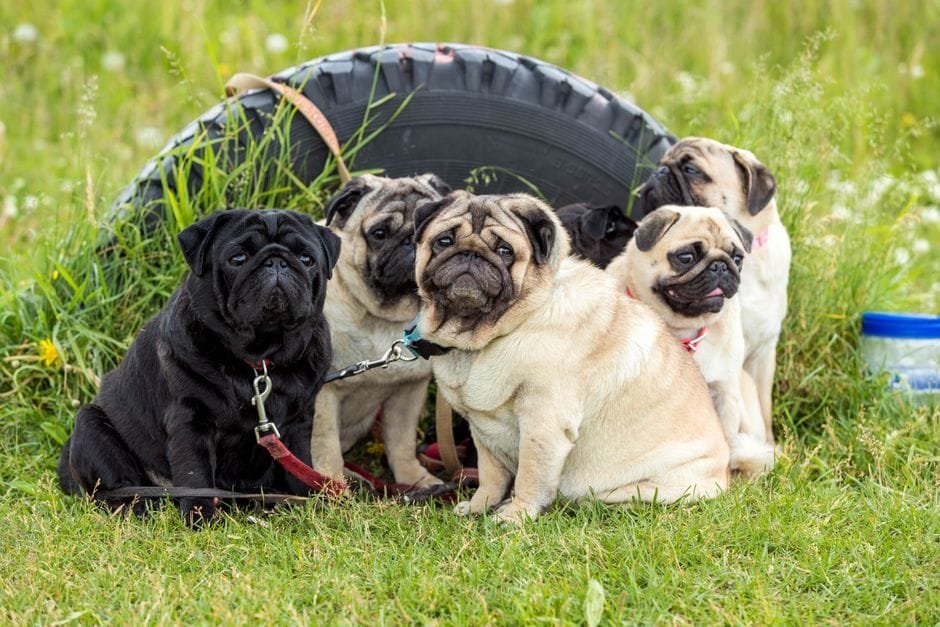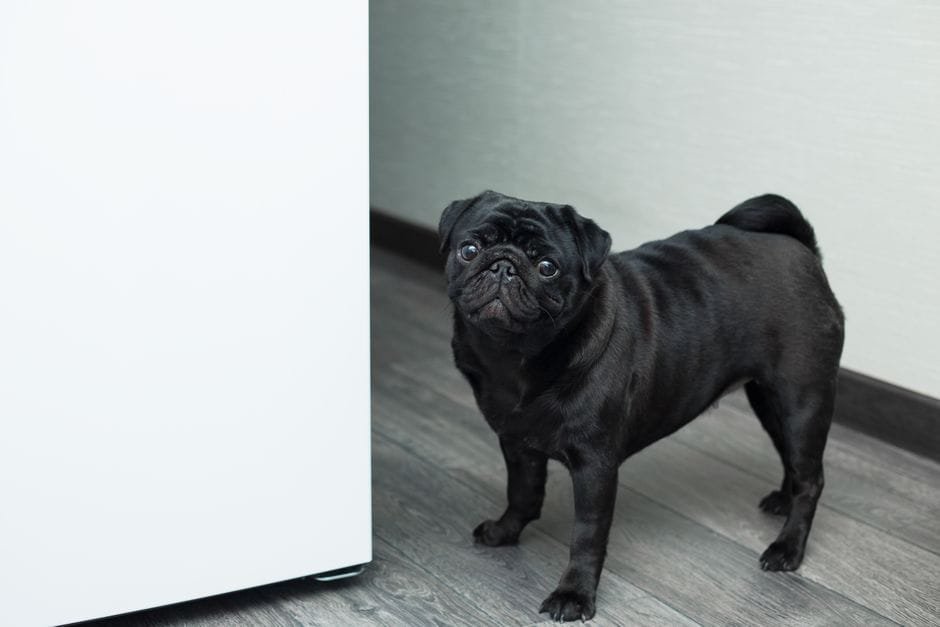
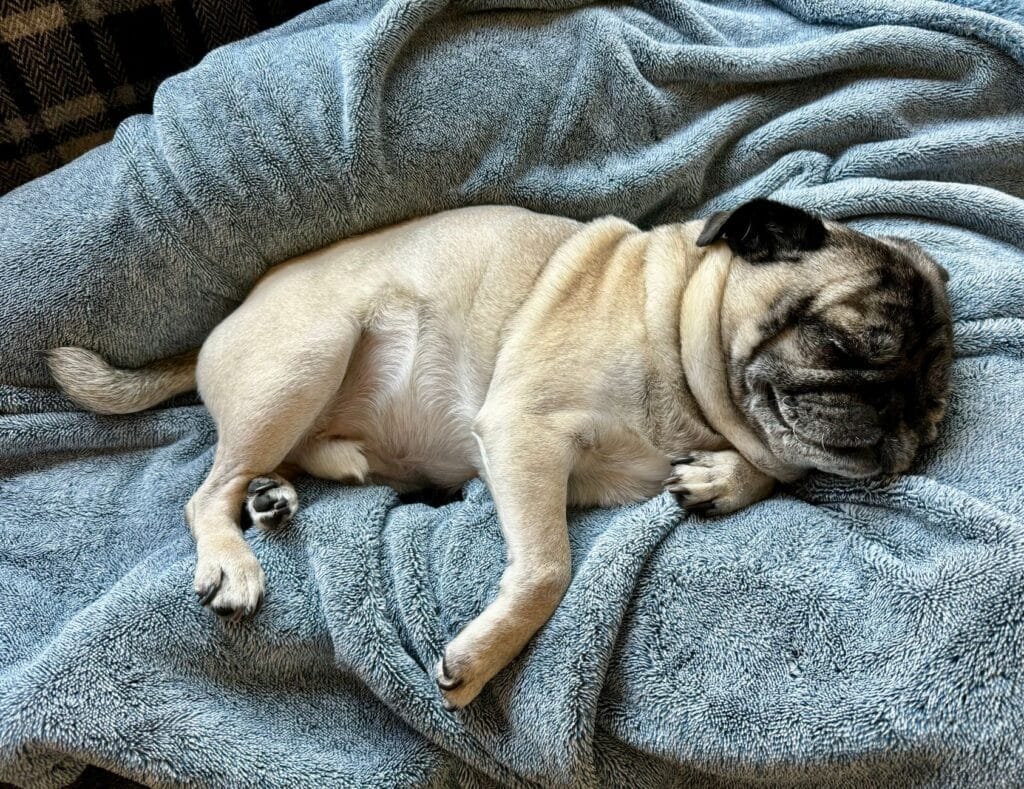
Why do pugs snore so much? The short answer is anatomy. Pugs are built in a way that almost guarantees noisy breathing, and for most owners, that familiar rumble becomes the soundtrack to every nap and night’s sleep. Yes, your pug probably snores louder than your partner. But understanding why it happens, and knowing when it crosses into a health concern, makes all the difference.
Why Pugs Snore More Than Other Dogs (The Short Answer)
Pugs belong to a group called brachycephalic breeds, dogs with flattened faces and shortened skulls. That distinctive squashed snout is adorable, but it means the soft tissue inside the throat and nose didn’t shrink to match the skull. There’s simply too much tissue packed into too small a space, and air has to push past all of it every time your pug takes a breath.
The result? Snoring. Sometimes gentle, sometimes thunderous, almost always constant.
The Anatomy Behind Pug Snoring: Brachycephalic Breeds Explained
To really understand why pugs snore so much, it helps to know a few key terms. Don’t worry, they sound more intimidating than they are.
BOAS (Brachycephalic Obstructive Airway Syndrome) is the umbrella term for the breathing difficulties that flat-faced breeds experience. It’s not one single problem but a cluster of anatomical quirks that combine to restrict airflow. You can read more about brachycephalic breeds and their health considerations on Wikipedia’s overview of BOAS.
Elongated soft palate is one of the most common contributors. The soft palate is the fleshy flap at the back of the roof of the mouth. In pugs, it’s often too long for the shortened skull, so it flops into the airway and vibrates with every breath. That vibration is a huge source of snoring.
Stenotic nares simply means narrow nostrils. Look at a pug’s nose closely and you’ll often see the nostrils are quite small and nearly closed. Less open space means more resistance for air trying to get in, which means more effort, more noise, and more snoring.
Together, these features create a system where your pug is working harder than most dogs just to breathe normally. Snoring is the audible result of that effort.
Common Causes of Pug Snoring
Anatomy is the baseline, but several everyday factors can make pug snoring noticeably worse.
- Sleep position: When a pug sleeps on their back, gravity pulls the soft palate further into the airway. Snoring gets louder. It’s that simple.
- Weight: Extra body fat around the neck and throat adds even more pressure to an already crowded airway. Even a small amount of excess weight can significantly increase snoring in pugs.
- Allergies and irritants: Dust, pollen, cigarette smoke, or strong cleaning products can inflame nasal passages and make breathing harder. If your pug snores more in certain rooms or seasons, this could be a factor.
- Excitement or exercise: A pug who’s been running around or is wound up after play will breathe harder, and that often means louder snoring once they finally settle down.
- Heat and humidity: Warm temperatures make breathing more difficult for any dog, but brachycephalic breeds feel it much more. Summer nights often bring louder snoring.
Is Your Pug’s Snoring Normal or a Warning Sign?
This is the question most pug owners genuinely worry about, and it’s a fair one. Why do pugs snore so much in a way that feels harmless versus in a way that signals something is wrong? The distinction isn’t always obvious, but there are clear patterns to look for.
Generally normal: Soft to moderate snoring during sleep, a consistent sound you’ve heard since puppyhood, snoring that stops when your pug shifts position, and no visible distress during waking hours.
Worth paying attention to: Snoring that has suddenly gotten much louder or changed in character. Heavy, laboured breathing even when resting and calm. Snoring accompanied by gasping, choking, or a sound like your pug is struggling to catch their breath. Blue or pale gums are a serious warning sign requiring immediate attention.
Pugs can also develop sleep apnoeawhere breathing actually pauses briefly during sleep. If you notice your pug stopping breathing for a moment and then startling awake with a snort, that’s something your vet should know about. The research on BOAS in brachycephalic breeds confirms that sleep-disordered breathing is genuinely common and worth monitoring.
When to See a Vet About Pug Snoring
Most pug snoring doesn’t need a vet visit on its own. But there are situations where you really shouldn’t wait.
Book an appointment if your pug shows any of these signs alongside their snoring:
- Struggling to breathe even when relaxed and cool
- Frequent gagging, retching, or vomiting
- Exercise intolerance, meaning they tire or breathe heavily after very mild activity
- Blue, grey, or pale gums at any point
- Snoring that has changed noticeably and quickly
- Disrupted sleep, restlessness, or repeated waking
Your vet may assess the structure of your pug’s nose, mouth, and throat to check for BOAS severity. In some cases, corrective surgery on the nostrils or soft palate can make a meaningful difference to quality of life. This isn’t something to rush into, but it’s absolutely worth discussing if your pug seems uncomfortable or exhausted from the effort of breathing.
Tips to Reduce Pug Snoring at Home
You can’t change your pug’s anatomy, but you can make their environment more comfortable and reduce the factors that make snoring worse.
Keep their weight healthy. This is probably the single most impactful thing you can control. A lean pug breathes more easily. Talk to your vet about ideal weight and feeding amounts if you’re unsure.
Try an elevated or orthopedic bed. A slightly raised head position can help keep the airway clearer during sleep. Some owners find their pug snores less when sleeping with their head propped up rather than flat.
Improve air quality. Keep the sleeping area free from dust, strong fragrances, and smoke. A small air purifier in the bedroom can help if your pug seems prone to congestion.
Avoid heat. Keep your home cool, especially in summer. Never let your pug overheat, since high temperatures make breathing significantly harder for brachycephalic dogs.
Encourage side sleeping. You can gently reposition your pug onto their side if you notice they’ve rolled onto their back and started snoring more heavily. Many pugs get used to sleeping on their side with a bit of encouragement.
Regular vet check-ups. An annual nose and throat check as part of your pug’s routine exam helps catch any worsening of their airway structure early.
How Pugs Compare to Other Flat-Faced Breeds
Pugs aren’t alone in the snoring department. French Bulldogs, English Bulldogs, and Boston Terriers all share similar anatomy and similar breathing challenges. BOAS affects all brachycephalic breeds to varying degrees.
That said, pugs tend to snore particularly loudly because their skulls are extremely foreshortened, their soft palates are often very long relative to their airway, and their nostrils can be quite narrow. French Bulldogs often have similar issues but with slightly different proportions, which changes their specific risk profile. If you’re weighing up breeds, our guide on how pugs compare to French Bulldogs as a breed covers the key differences in temperament and health side by side.
The important point is that all flat-faced breeds deserve owners who understand their respiratory limitations. Snoring is part of the package, but suffering isn’t.
FAQ
Is it normal for pugs to snore loudly every night?
Yes, nightly snoring is very common in pugs and is largely down to their flat-faced anatomy. Most pug owners consider it a normal part of life with the breed. It becomes a concern if the snoring changes suddenly, sounds like gasping or choking, or is paired with signs of breathing difficulty during the day.
Can pug snoring be a sign of a serious health problem?
It can be. While most pug snoring is benign, severe BOAS (brachycephalic obstructive airway syndrome) is a genuine health condition that causes real distress. Signs like laboured breathing at rest, exercise intolerance, sleep disruptions, or pale gums mean a vet visit is needed. Why do pugs snore so much in some cases? It’s because their anatomy leaves very little margin for anything that further restricts airflow, so problems can escalate. Early assessment is always worthwhile.
What can I do to help my pug breathe easier while sleeping?
Keep your pug at a healthy weight, provide a comfortable bed that allows a slightly raised head position, maintain a cool and clean sleeping environment, and try to encourage side sleeping rather than on the back. If you’re worried about the severity of their snoring, your vet can assess whether any anatomical factors might benefit from treatment.