
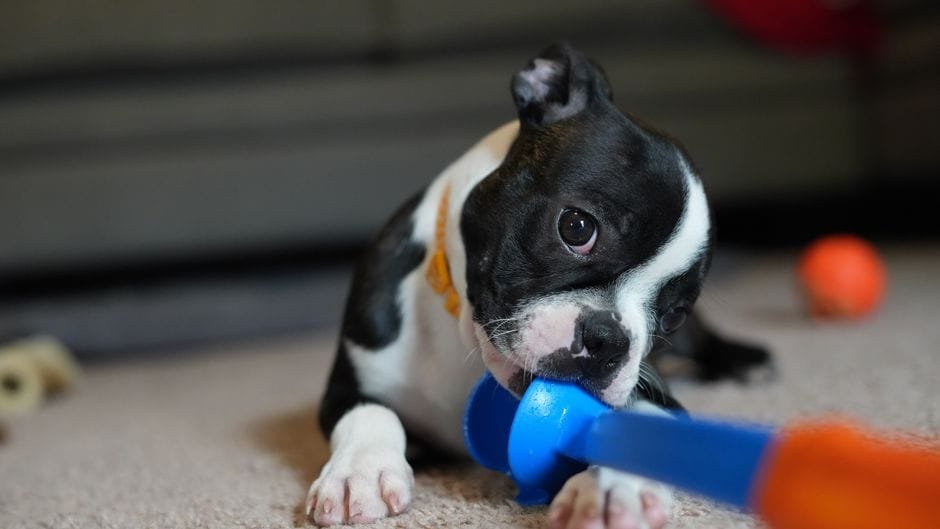
The most effective boston terrier puppy training tips for beginners are the ones built around how this specific breed is wired, not copied from a generic puppy manual. Boston Terriers are sharp, curious, and deeply people-oriented, but they also have a stubborn streak that can catch new owners off guard. Once you understand that, everything clicks.
Why Boston Terrier Puppies Need Breed-Specific Training
Boston Terriers sit in an interesting middle ground. They’re intelligent enough to learn commands quickly, sometimes within just a few repetitions, but they’re also independent thinkers who will test your patience when they decide something isn’t worth their effort. That’s not disobedience; it’s just Boston Terrier logic.
They’re also a brachycephalic breed, meaning their flat faces create some respiratory limitations. This matters during training because long, intense sessions or training in hot weather can tire them out faster than it would a Labrador. Keep sessions short and always train in a cool, well-ventilated space.
Harsh corrections are also a poor fit for this breed. Boston Terriers are emotionally sensitive. Raise your voice or use punishment-based methods and you’ll likely get a shut-down puppy who stops engaging altogether. Positive reinforcement, small treats, and calm consistency work far better.
When to Start Training Your Boston Terrier Puppy
Start the moment your puppy arrives home, even at 8 weeks old. Puppies are absorbing information constantly at this age. Every interaction teaches them something, so you may as well make those lessons intentional.
Formal training sessions should be brief at this stage, around 3 to 5 minutes, two or three times a day. That’s genuinely enough. A young Boston Terrier’s attention span is short, and a tired or frustrated puppy learns nothing. End every session on a win, even if that just means asking for a “sit” you know they’ll nail.
By 10 to 12 weeks, you can stretch sessions slightly and start introducing more commands. By 16 weeks, consistent daily training should be a non-negotiable part of your routine.
Essential First Commands to Teach (Sit, Stay, Come, Leave It)
Four commands will get you the furthest in the earliest weeks: sit, stay, come, and leave it. These aren’t just tricks; they’re safety tools.
- Sit: Lure with a treat from nose to forehead. The puppy’s bottom naturally drops. Mark with “yes” or a clicker the moment it happens, then reward.
- Stay: Ask for a sit, take one step back, immediately return and reward. Build duration in small increments. Don’t rush this one.
- Come: Never use this command in anger or to do something the puppy dislikes (like nail trimming). Coming to you should always feel like a party.
- Leave it: Teach this early. Boston Terriers are curious and will investigate everything with their mouths. A solid “leave it” can prevent them from eating something dangerous.
Train one command per session at first. Mixing too many cues in one session confuses young puppies and slows progress.
Crate Training Your Boston Terrier Puppy
Done right, crate training gives your Boston Terrier a safe, calm space they’ll actually seek out. Done wrong, it becomes a source of anxiety. The difference is almost entirely in how you introduce it.
Start by feeding meals near the crate, then inside it with the door open. Never shove your puppy inside and close the door on day one. Build positive associations over several days before you start closing the door for short periods.
Getting the size right matters more than most new owners realize. A crate that’s too large lets the puppy use one end as a bathroom, which works directly against potty training. Check out this guide on choosing the right crate size for your Boston Terrier before you buy anything.
Boston Terriers can be prone to separation anxiety, so crate training helps them learn that alone time is safe and temporary. Aim for short departures first, building gradually to longer ones.
Potty Training: What to Expect and How to Stay Consistent
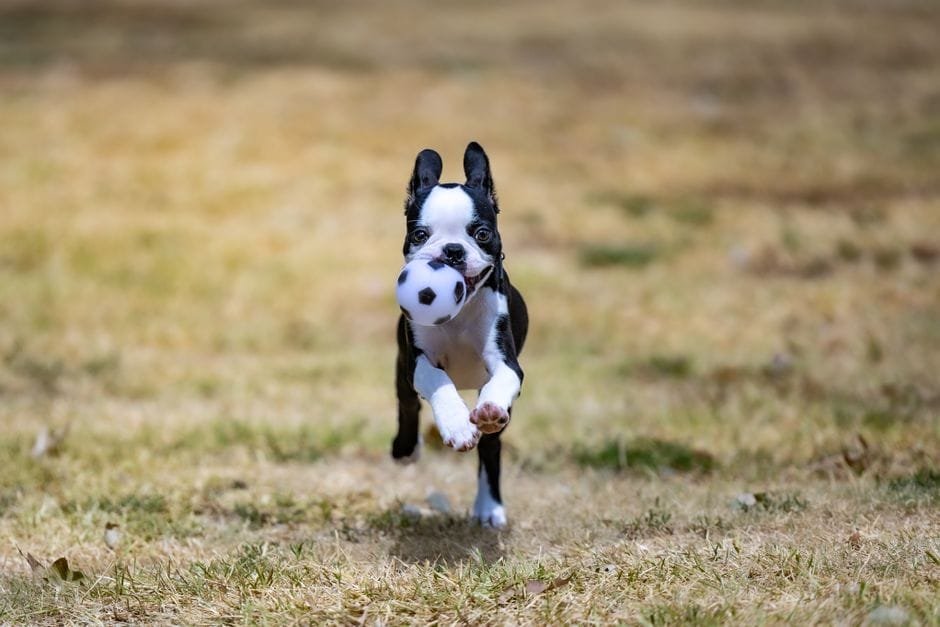
Potty training a Boston Terrier puppy takes most owners anywhere from 4 to 8 weeks of consistent work. Some puppies click faster; some take longer. The variable is almost always consistency on the human end, not stubbornness on the dog’s end.
Take your puppy outside first thing in the morning, after every meal, after naps, after play, and before bed. That’s a lot of trips, but bladder control develops slowly. Young puppies physically cannot hold it for long.
When accidents happen inside, and they will, clean them up with an enzyme-based cleaner that breaks down the odor. If the puppy can still smell a previous accident, they’ll return to that spot. Scolding after the fact does nothing useful; puppies don’t connect a correction to something that happened more than a few seconds ago.
Feeding your puppy on a consistent schedule helps enormously, since predictable meals lead to predictable bathroom timing. If you’re unsure about portion sizes, this guide on how much a Boston Terrier puppy should eat will help you dial that in.
Socialization: Exposing Your Puppy to the World Safely
Socialization isn’t about making your puppy meet as many dogs as possible. It’s about building a puppy who is calm and confident across a wide range of environments, sounds, surfaces, and people.
The prime socialization window closes around 12 to 14 weeks, so this is genuinely time-sensitive. Expose your Boston Terrier puppy to car rides, different floor surfaces, umbrellas, children, strangers in hats, bicycles, and anything else that’s part of your normal life. Make every new experience positive with treats and calm praise.
For puppy classes, check that vaccinations are up to date for all attending dogs. A good puppy class is one of the best investments you can make. It covers socialization and basic training simultaneously, and watching other puppies makes the learning feel less like work for your Boston.
How to Handle Biting and Nipping
Every puppy bites. Boston Terrier puppies bite enthusiastically, because they’re mouthy, playful, and still figuring out how sharp their teeth are. This is completely normal and completely manageable.
When your puppy bites too hard during play, stop playing immediately. Get up, turn away, and give them 30 seconds of no attention. Then resume. Consistency here is everything. If one person in the household yelps and stops, but another keeps playing, the puppy gets a mixed message.
Redirect biting toward appropriate chew toys rather than your hands or clothing. For a more detailed breakdown of this process, this resource on how to stop a puppy from biting covers the technique step by step.
Leash Training Tips for Boston Terriers
Boston Terriers tend to pull on the leash with surprising force for a dog that typically weighs between 12 and 25 pounds. They’re enthusiastic walkers with a lot of energy to burn.
Start leash training indoors, in your garden, or somewhere low-distraction before trying to walk on a busy street. Let your puppy wear the collar or harness around the house first, so the gear itself isn’t a novelty. A front-clip harness generally works well for Boston Terriers because it reduces pulling without putting pressure on their throat, which matters for a brachycephalic breed.
Practice loose-leash walking by stopping the moment tension appears on the lead. Wait for the puppy to release pressure, then continue. It takes patience, but Boston Terriers catch on to this fairly quickly once they realize pulling literally gets them nowhere. Keep early walks short, and always watch for signs of overheating, heavy panting, or slowing down.
Common Training Mistakes Boston Terrier Beginners Make
The biggest mistake is inconsistency. Boston Terriers are smart enough to notice when the rules change, and they’ll exploit that gap every time. If jumping up is sometimes cute and sometimes scolded, the puppy learns that jumping is worth trying.
Training sessions that run too long are another frequent issue. When a Boston Terrier gets bored or tired, they get silly or shut down. Five focused minutes beats thirty unfocused ones, every time.
Skipping socialization because “my dog is friendly” is also a trap. A Boston Terrier who only knows their home environment can become anxious or reactive when they encounter the outside world later. Put in the socialization work early, and you’ll have a confident, adaptable dog for life. For a broader picture of what good care looks like across their whole life, take a look at this overview of Boston Terrier lifespan and long-term care.
Finally, don’t underestimate the breed. New owners sometimes assume a small dog doesn’t need real training. Boston Terriers thrive with structure and challenge. Give them both, and you’ll have a genuinely impressive companion.
FAQ
Are Boston Terriers easy to train for first-time owners?
Yes, with the right approach. Boston Terriers are intelligent and eager to please, which makes them responsive to positive reinforcement training. Their stubbornness can frustrate beginners, but short, consistent sessions with clear rewards keep them engaged. Most first-time owners find the breed very manageable once they understand how to work with the dog’s personality rather than against it.
How long does it take to potty train a Boston Terrier puppy?
Most Boston Terrier puppies are reliably potty trained within 4 to 8 weeks when owners are consistent with outdoor trips and a regular feeding schedule. Some puppies take a little longer. The key variable is human consistency, not the puppy’s ability.
What is the best training method for a Boston Terrier?
Positive reinforcement is the clear winner with this breed. Boston Terriers respond well to small food rewards, praise, and play as motivation. Punishment or harsh corrections tend to shut them down emotionally and damage your relationship with the dog. Keep sessions short, upbeat, and reward-heavy.
At what age should I start training my Boston Terrier puppy?
Start on day one. Even an 8-week-old puppy is learning from every interaction. Formal training sessions can begin immediately, kept to 3 to 5 minutes at that age. Waiting until the puppy is older is one of the most common and costly mistakes new owners make.
Why is my Boston Terrier puppy so stubborn during training?
Boston Terriers are independent thinkers who evaluate whether the task is worth their effort. If the reward isn’t motivating enough, or the session has gone on too long, they’ll disengage. Try higher-value treats, shorter sessions, and ending each session before your puppy loses interest. Stubbornness often signals that training needs to be made more rewarding, not more strict.