Knowing how to introduce a new puppy to an older dog is one of the most important things you can do to set your whole household up for success. Get it right, and you’ll have two dogs who genuinely enjoy each other. Rush it, and you can create anxiety and tension that takes months to undo.
Why the Introduction Process Matters (and Why Rushing It Backfires)
Your older dog has a routine. They know where they sleep, where they eat, and when they get your attention. A puppy arriving without warning feels like an invasion, not a gift. Even the most laid-back dog can react poorly to a bouncy stranger suddenly sharing their home.
The introduction process works because it gives your older dog time to process each new development at their own pace. It also prevents the puppy from learning that pestering your older dog is an acceptable hobby. Both of those outcomes matter enormously in the first few weeks.
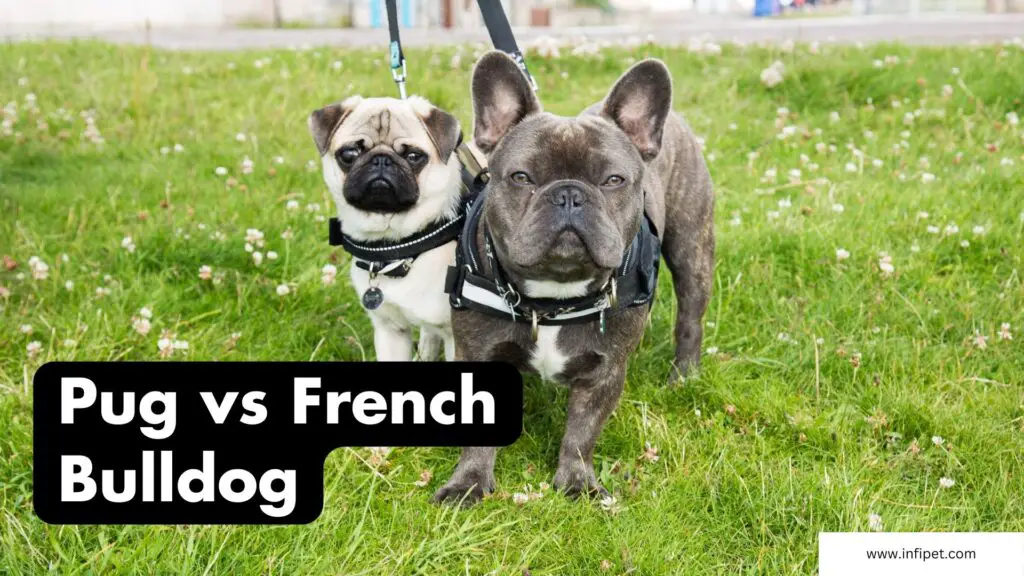
For brachycephalic breeds like English Bulldogs, French Bulldogs, and Boston Terriers, this is especially worth noting. These dogs can tire quickly and often prefer calmer interactions. A high-energy puppy bouncing off their head isn’t just annoying; it’s genuinely exhausting for a dog already working harder to breathe during play. A slow, managed introduction protects them.
Before the Puppy Arrives: Preparing Your Home and Older Dog
Set up your spaces before the puppy comes home. Your older dog needs a safe zone they can retreat to and a clear signal that their resources are still theirs.
- Separate feeding stations: Feed dogs in different rooms from day one. Resource guarding over food is one of the most common flashpoints.
- Separate sleeping areas: Giving each dog their own dedicated sleeping space removes the competition before it starts. Your older dog’s bed is theirs alone.
- Baby gates and pens: A puppy pen or baby gate lets both dogs see and smell each other without physical contact. This is your most useful piece of equipment in week one.
- Scent introduction: A few days before the puppy arrives, bring home a blanket the puppy has slept on. Let your older dog sniff it at their leisure. This isn’t magic, but it takes one layer of novelty off the first meeting.
The Neutral Territory First Meeting: Step-by-Step
The first face-to-face meeting should never happen in your home or garden. Your older dog considers those spaces theirs. A neutral spot, like a quiet corner of a nearby park or an empty car park, gives neither dog home advantage.
- Walk parallel first. Have two people, one handling each dog, walk them on loose leashes about 10 metres apart. Let them notice each other without forcing an interaction.
- Close the gap gradually. Over 10 to 15 minutes, narrow the distance. Watch your older dog’s body language the whole time, not the puppy.
- Allow a brief sniff. When both dogs look relaxed, let them approach. Keep it to a few seconds. Call them apart before tension can build.
- Repeat and end on a positive note. Several short greetings are better than one long, uncontrolled one. Finish while both dogs are still calm.
If your older dog is a Bulldog, keep the meeting short. Even mild excitement raises their body temperature and respiratory effort. A calm five-minute introduction beats a chaotic twenty-minute one every time.
The First 48 Hours at Home: Managing Space and Supervision
Bring the puppy inside after your older dog has already settled indoors. Let your older dog sniff the puppy’s carrier before the puppy emerges. Keep the puppy in their pen or a separate room initially, and allow contact through the barrier first.
Supervised, short interactions of five to ten minutes are your template for the first two days. Any sign of stress from your older dog means it’s time to separate and try again later. Never leave them alone together during this phase.
Give your older dog extra one-on-one attention. This isn’t the time to cut their walk short or skip their evening cuddle. They need evidence that their life hasn’t been downgraded.
Week One: Building Positive Associations Between Both Dogs
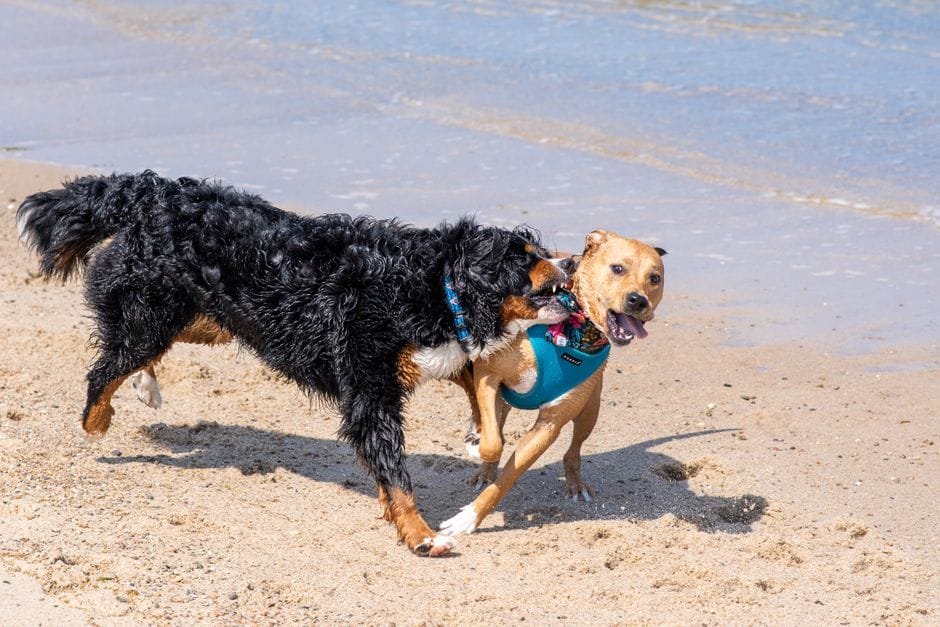
The goal of week one is simple: make good things happen when both dogs are near each other. Feed them on opposite sides of a baby gate. Give high-value treats during calm parallel moments. Take them for short walks together, parallel and loose-leash, even if it’s just around the block.
Keep sessions short and predictable. Two or three supervised free interactions a day, each ending before either dog gets overwhelmed, builds a positive track record faster than marathon sessions that fizzle out in frustration.
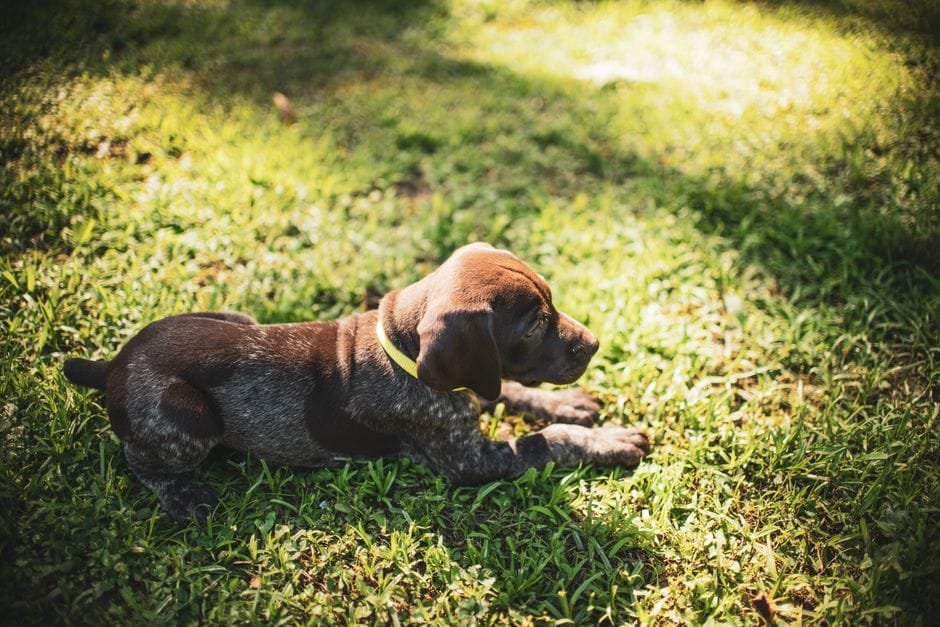
This is also the week to start addressing puppy manners. If your puppy is nipping at your older dog, work on how to stop a puppy from biting so your older dog isn’t on the receiving end of needle teeth all day. A puppy with better bite inhibition is a much more tolerable companion for any adult dog.
Reading Body Language: Green Flags vs. Warning Signs
Learning to read what your dogs are actually saying to each other is the single most useful skill you can develop during this period. You don’t need a professional training background; you just need to know what to look for.
Green flags from your older dog
- Loose, wiggly body posture
- Play bow (front end down, bottom up)
- Soft eyes, relaxed ears
- Choosing to re-approach the puppy after moving away
Warning signs that need a break
- Stiff, still body or rigid tail
- Hard stare with no blinking
- Lip curl or showing teeth without the playful context
- Low, sustained growling
A growl is communication, not a declaration of war. Your older dog is saying “I’ve had enough.” The right response is to calmly separate the dogs, not to scold the older dog for growling. Punishing growls teaches dogs to skip the warning and go straight to snapping.
How to introduce a new puppy to an older dog successfully often comes down to this: trust your older dog to communicate, and trust yourself to listen.
Common Mistakes to Avoid During the Introduction Period
Even well-meaning owners make a few consistent errors that slow things down or create friction.
- Forcing interaction. Holding your older dog still while the puppy climbs on them teaches your older dog that they have no control. Control matters enormously to dogs.
- Neglecting your older dog’s routine. Walks, meals, and cuddles should stay as consistent as possible. Any shift will be noticed and resented.
- Leaving them unsupervised too soon. Most experts suggest waiting until at least two to four weeks of consistently positive interactions before any unsupervised time together. Even then, start with short periods.
- Correcting the older dog for setting limits. If your older dog growls when the puppy pushes too far, they’re doing their job. Redirect the puppy instead.
How Long Does It Take for an Older Dog to Accept a Puppy?
Honestly, it varies. Some dogs settle into a comfortable routine within two to three weeks. Others, particularly seniors or dogs who’ve been only-pets for years, may take two to three months before they genuinely relax around the new addition.
Bulldogs and other brachycephalic breeds can sometimes take longer simply because puppy energy is more physically taxing for them. A four-month-old French Bulldog puppy and a seven-year-old English Bulldog have very different ideas about what counts as a fun afternoon. Patient management of those interactions, giving the older dog plenty of rest and recovery time, makes a real difference.
The process of how to introduce a new puppy to an older dog isn’t linear. There will be good days and setbacks. A regression in week three doesn’t erase the progress of weeks one and two. Keep sessions calm, keep reinforcing good moments, and give it time.
Most multi-dog households do find their rhythm. By the time your puppy hits six months and starts to calm down slightly, your older dog has usually made a decision about them. And more often than not, that decision is grudging tolerance that quietly turns into genuine companionship.
FAQ
How long does it take for an older dog to accept a new puppy?
Most older dogs show meaningful improvement within two to four weeks, but full acceptance can take anywhere from one to three months. Senior dogs and those who’ve never lived with another dog often need the longer end of that range. Consistency and low-pressure interactions are the biggest factors in speeding up the process. For more on dog behaviour and social dynamics, the research literature is worth a look if you want to go deeper.
What if my older dog growls or snaps at the new puppy?
A growl is your older dog drawing a boundary, and that’s actually healthy communication. Don’t punish the growl. Instead, calmly separate the dogs and give your older dog space. If snapping becomes frequent or the older dog is actively pursuing the puppy to intimidate them, consult a qualified trainer or animal behaviourist who uses positive, reward-based methods.
Should I let my older dog correct the puppy?
Mild corrections, like a warning growl or a brief air snap with no contact, are normal and can actually teach the puppy appropriate boundaries. What you want to avoid is any situation where the older dog feels forced to escalate because previous signals were ignored. If you see your puppy being persistently pestering despite clear warnings, step in and redirect the puppy rather than leaving it to your older dog to sort out alone.