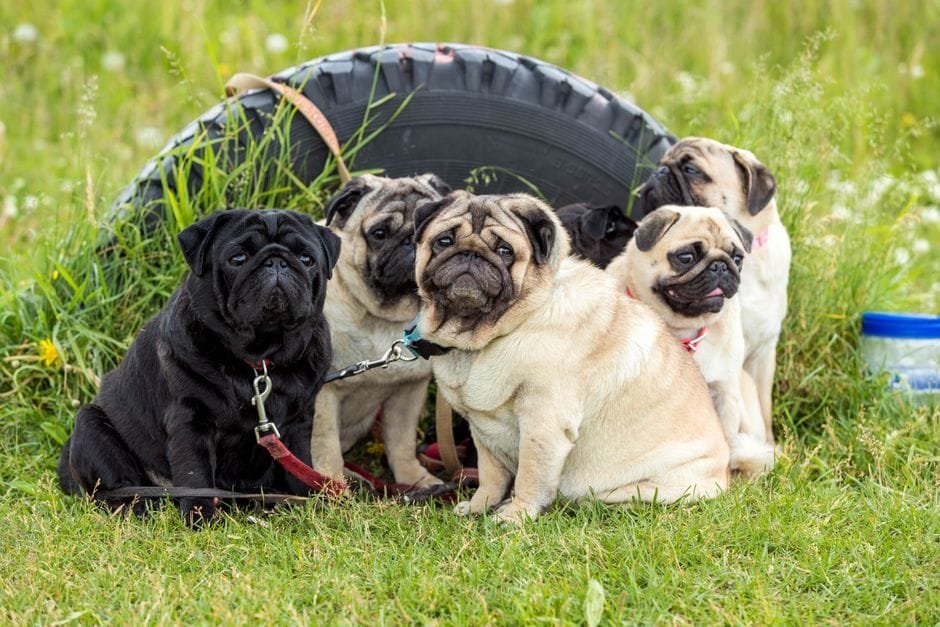
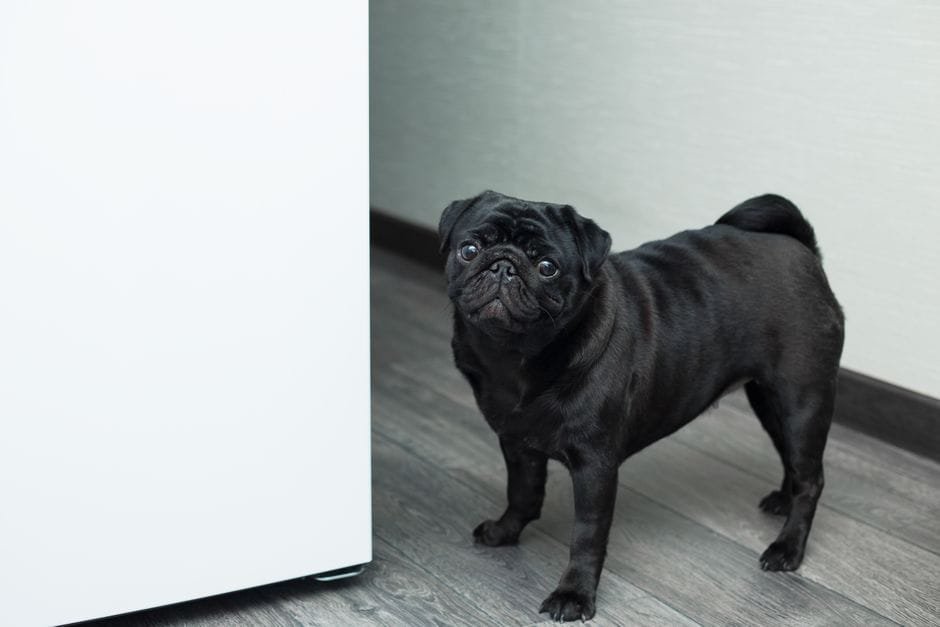
Pug potty training tips that actually work start with one honest admission: Pugs are harder to housebreak than most breeds, and that’s not your fault or theirs. They’re smart enough to know what you want, and cheeky enough to decide they’d rather not. Understanding why they’re tricky is the first step to getting real results.
Why Potty Training a Pug Is Uniquely Challenging
Most generic puppy training guides skip over breed temperament entirely. That’s a problem with Pugs, because their specific quirks directly affect how well standard methods work. Pugs have short attention spans and a famously independent streak. They’re motivated by food and affection, not by an eagerness to please the way a Labrador might be.
Their brachycephalic anatomy, that flat, squished face, also affects outdoor training time. Pugs can struggle in heat and cold more than longer-snouted breeds. On a hot August afternoon or a freezing January morning, your Pug may dig their heels in at the door and refuse to budge. This isn’t defiance for its own sake. Their bodies genuinely feel temperature extremes more acutely. If you have concerns about how your Pug handles outdoor conditions, a vet check is always worthwhile. You can also read more about common Pug health problems that can affect training to understand what might be going on beneath the surface.
Add a small bladder, a love of comfort, and a breed that’s been a lapdog for centuries, and you’ve got a dog who sees absolutely no reason why outside should be more appealing than the warm kitchen floor.
How Long Does It Take to Potty Train a Pug? (Realistic Timeline)
Expect three to six months to reach reliable housebreaking with a Pug puppy. Some owners see real consistency around four months. Others are still managing occasional accidents at eight months. Both are normal.
The key markers to watch for aren’t perfection but progress: fewer accidents per week, the dog moving toward the door unprompted, and longer stretches of success indoors. Full reliability, meaning almost no accidents, often clicks somewhere between six and twelve months of age, once bladder control physically matures alongside the training.
Adult Pugs can often be retrained faster, particularly rescues who were previously housetrained. More on that below.
What You Need Before You Start (Supplies and Setup)
Getting your setup right before day one saves a lot of frustration. Here’s what actually earns its place:
- Enzymatic cleaner: Standard household cleaners don’t remove urine odour at a molecular level. Dogs return to spots they can still smell, even if you can’t. A product like Nature’s Miracle or a similar enzymatic cleaner is non-negotiable.
- A crate, sized correctly: Just big enough for your Pug to stand, turn, and lie down. No larger. Extra space lets them toilet in one corner and sleep in another.
- High-value treats: Small, soft, smelly treats work best. Pugs are food-motivated to an almost comical degree, so use that to your advantage.
- A consistent outdoor spot: Designate one specific area outside as the potty zone. The scent builds up and acts as a cue.
- A leash for outdoor trips: Even in a fenced garden. It keeps your Pug focused instead of sniffing every blade of grass for twenty minutes.
Puppy pads have their place, but they can create confusion if used alongside outdoor training. More on that trade-off in the FAQ below.
Step-by-Step Pug Potty Training Method
The method that works best for Pugs is a tight loop of supervision, schedule, and reward. No punishment, no scolding, just patient repetition.
Step 1: Take your Pug outside first thing, every time. Out of the crate, out the door. No detours. First thing in the morning, after every meal, after every nap, and before bed. These are the highest-probability moments.
Step 2: Use a consistent cue word. Pick a phrase like “go potty” and say it calmly as your Pug sniffs around. Over time, this word becomes a genuine prompt they associate with the action.
Step 3: Reward the second they finish. Not when they come inside. Right there, outside, the moment they’re done. A treat and enthusiastic praise immediately. Pugs need that reward fast, within a few seconds, or they lose the connection.
Step 4: Supervise indoors with zero free roam initially. Keep your Pug in the same room as you, tethered to you with a leash if needed. If you can’t watch them, they go in the crate. This removes the opportunity for sneaky accidents behind the sofa.
Step 5: React calmly to accidents. If you catch them in the act, a calm “no” and an immediate trip outside. If you find it after the fact, clean it up and say nothing to the dog. They genuinely don’t link your frustration to something that happened five minutes ago. Scolding only makes them anxious, which can actually make accidents more frequent.
Building a Consistent Potty Schedule for Pugs
Pugs under twelve weeks old need a potty trip roughly every one to two hours during waking hours. By four to five months, you can stretch this to every two to three hours. A rough daily structure might look like this:
- Immediately on waking
- After breakfast
- Mid-morning
- After lunch
- Mid-afternoon
- After dinner
- Before bed
Consistency is the real training tool here. Your Pug’s body adjusts to a schedule faster than you might expect, and a predictable routine genuinely reduces accidents. Try to keep feeding times fixed too. Food in at the same times means output becomes more predictable.
Crate Training as a Potty Training Tool
Dogs instinctively avoid soiling where they sleep. A properly sized crate uses this instinct to your advantage. The crate is not a punishment; it’s a safe den. Introduce it positively with treats and meals inside before you ever close the door.
At night, a Pug puppy under four months will likely need one overnight outing. Set an alarm rather than waiting for whining, which can reinforce demanding behaviour. By four to five months, many Pugs can manage through the night. Every dog is slightly different, so follow your individual puppy’s signals.
If your Pug is consistently having accidents in the crate, the crate may be too large, or there may be an underlying health issue worth discussing with your vet.
Handling Bad Weather: Pugs and Outdoor Potty Challenges
Here’s where Pug potty training tips diverge sharply from advice written for other breeds. Pugs can be genuinely reluctant in cold, heat, or rain, and forcing a long outdoor session in extreme weather isn’t the answer either.
For cold days, a Pug coat or jumper can make a real difference. Keep trips short and purposeful. Head to the designated spot, give the cue word, wait two or three minutes, reward success, and come straight back in. Don’t let a weather protest derail the whole routine. Missing a scheduled trip means a higher chance of an indoor accident.
In hot weather, early morning and evening trips avoid the hottest part of the day. Never leave a Pug outside unattended in summer heat. If you have a French Bulldog in the house too, this weather sensitivity applies equally. Our French Bulldog potty training guide covers similar strategies if you’re training both at once.
Common Pug Potty Training Mistakes to Avoid
Giving too much freedom too soon. Earning free roam of the house is a privilege that should come gradually, over weeks and months, not days.
Inconsistent schedules. Sleeping in on weekends and skipping the morning trip is one of the most common reasons training stalls. The Pug’s bladder doesn’t know it’s Saturday.
Punishing accidents after the fact. As covered above, it achieves nothing except anxiety. Clean up thoroughly with enzymatic cleaner and move on.
Rewarding too slowly. The treat window is narrow. If you fumble with the treat bag and reward ten seconds after the act, you’re technically rewarding walking back to the door, not the toilet behaviour.
Using puppy pads and outdoor training simultaneously without a clear transition plan. Mixing both signals can confuse a Pug about where exactly the approved toilet area is. If you start outdoors, stay outdoors from the start if at all possible.
Potty Training an Adult or Rescue Pug
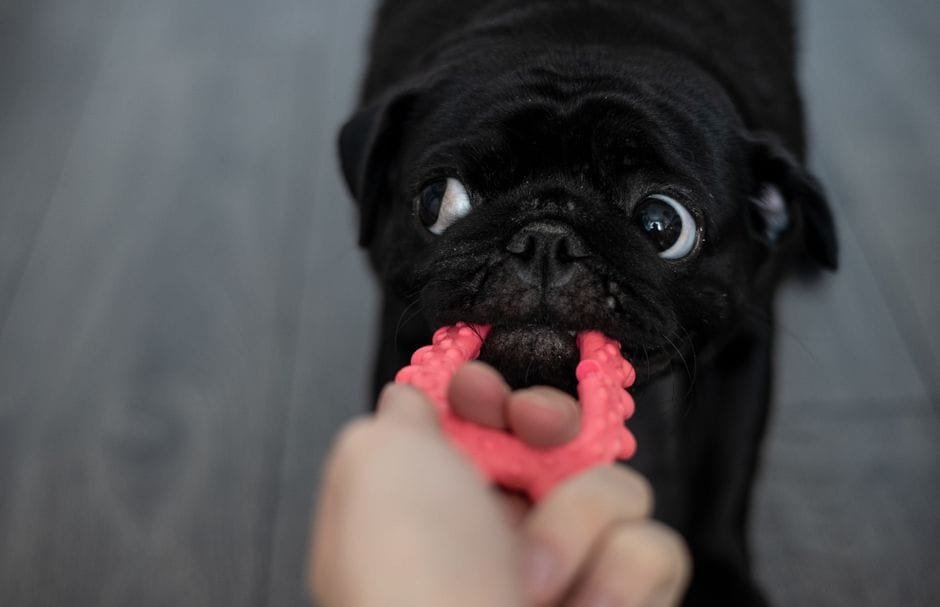
Rescue Pugs sometimes arrive with no housetraining at all, and others were reliably trained but have slipped after a change of environment. Either way, the approach is essentially the same as for a puppy, just faster. Adult dogs have better bladder control, which means fewer required trips and a shorter overall timeline.
Treat a newly arrived adult Pug as if they know nothing about your home’s rules, because they don’t. Start the schedule from scratch, use the crate for unsupervised periods initially, and reward outdoor success every single time for at least the first few weeks. Most adult Pugs show solid improvement within four to eight weeks when given a clear, consistent routine. Patience still applies. Some Pugs carry anxiety from their previous environment, and anxious dogs have more accidents. Build trust first, and the training follows.
FAQ
How long does it take to potty train a Pug?
Most Pug puppies reach reliable housebreaking somewhere between three and six months of consistent training. Full bladder control doesn’t physically mature until around six months of age, so accidents before that point are expected. Adult rescues can often be retrained in four to eight weeks.
Why does my Pug keep having accidents inside despite training?
The most common culprits are too much unsupervised freedom indoors, a schedule that isn’t consistent enough, or not rewarding outdoor success quickly enough. It’s also worth ruling out a medical cause such as a urinary tract infection if accidents are very frequent or your Pug seems uncomfortable. A vet check is a sensible step if the problem persists despite solid training efforts.
Should I use puppy pads or take my Pug outside to potty train?
Outdoor training from the start is generally cleaner and less confusing long-term. Puppy pads can be useful for very young puppies in apartment buildings or during extreme weather, but they teach the dog that toileting indoors is acceptable, which you then have to untrain. If you do use pads, have a clear plan to transition outdoors gradually by moving the pad closer to the door over time, then outside, then removing it altogether.