

Quick Answer: Which Is Better for Apartments?
For most apartment dwellers, the Boston Terrier vs French Bulldog which is better for apartments question has a clear lean: the French Bulldog edges ahead for typical city living. Frenchies are calmer, quieter, and need less exercise. Boston Terriers are excellent runners-up, especially if you want a slightly more active companion and your building has no breed restrictions targeting Frenchies.
Boston Terrier vs French Bulldog at a Glance
Here’s a side-by-side snapshot of the specs that matter most if you’re working with limited square footage.
| Trait | Boston Terrier | French Bulldog |
|---|---|---|
| Weight | 12-25 lbs | 20-28 lbs |
| Noise Level | Moderate (can bark) | Low (rarely barks) |
| Energy Level | Medium, High | Low, Medium |
| Grooming | Minimal | Minimal |
| Average Purchase Price | $1,000, $2,500 | $2,000, $5,000+ |
| Trainability | High | Moderate |
| Alone Time Tolerance | Moderate | Moderate, Low |
For a deeper look at breed-specific traits beyond apartment life, the full French Bulldog vs Boston Terrier breed comparison covers personality, history, and physical differences in much more detail.
Size and Space: How Much Room Do They Actually Need?
Neither breed needs a mansion. Both top out under 30 pounds, and both are genuinely comfortable in a studio or one-bedroom flat. The French Bulldog is the heavier of the two on average, but the difference is a few pounds, not a dealbreaker.
What matters more than square footage is furniture access and temperature. Frenchies love a couch. If you’re in a small apartment, expect your dog to occupy about 60% of that couch. Boston Terriers are similarly snuggly but have a bit more physical energy, so they can get restless if cooped up without stimulation. A good puzzle toy or a brief hallway play session goes a long way.
Crate training is worth doing with either breed. Knowing the right crate size for a Boston Terrier in a small home matters more than people think. Too large a crate in a tiny apartment just eats floor space; the right fit keeps your dog calm and your living room functional.
Noise Levels: Will Your Neighbors Complain?
This is probably your biggest practical concern, and it’s where the Boston Terrier vs French Bulldog which is better for apartments debate gets real.
French Bulldogs are naturally quieter. They’re alert dogs, but barking for the sake of barking isn’t really their thing. You’ll hear snoring, snuffling, and the occasional excited grunt, but a Frenchie rarely sets off the neighbor next door. Most Frenchie owners in apartment buildings report zero noise complaints.
Boston Terriers are perkier and more reactive. They can absolutely bark at sounds in the hallway, strangers near the door, or a squirrel visible through the window. It’s manageable with consistent training, but out of the box, a Boston requires more noise management than a Frenchie. If your walls are thin or your building has a noise policy, that’s worth factoring in.
Both breeds snore and breathe loudly due to their flat faces. That’s a brachycephalic trait you sign up for with either dog. Light sleepers, consider yourself warned.
Exercise Needs in a Small Space
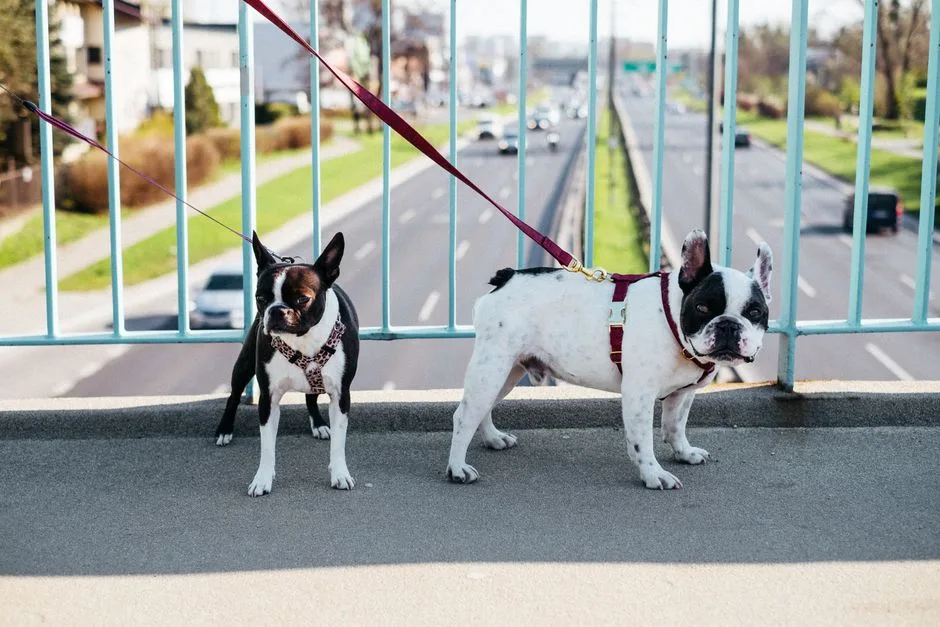
French Bulldogs have a reputation as couch potatoes, and honestly, it’s earned. Two short walks a day, 15-20 minutes each, keeps most Frenchies happy. Add a short play session at home and you’re done. They tire quickly, especially in warm weather, and they genuinely prefer lounging to marathon fetch sessions.
Boston Terriers need a bit more. Plan for 30-45 minutes of physical activity daily. They’re athletic and love to run and chase, so a nearby dog park makes their life considerably richer. A Boston left without enough stimulation can become a Boston who chews your shoes.
The good news is that neither breed requires a backyard. Both adapt well to walk-based exercise routines, and neither is built for long runs anyway given their flat faces. Hot days are a problem for both. Exercise in the early morning or evening during summer, and always watch for signs of overheating.
Temperament and Alone Time: Who Handles Apartment Life Better?
Both breeds are companion dogs at heart. They were bred to be close to people, and that shows in how they behave when you leave. Separation anxiety is a real risk with either, particularly if you’re out for eight-plus hours.
French Bulldogs tend to be a bit more velcro-dog in nature. They bond intensely with their person and can become distressed when left alone for long stretches. It’s not universal, but it’s common enough that many Frenchie owners work from home or arrange a mid-day dog walker. One additional nuance: Frenchies can be territorial with other dogs, which sometimes creates tension in shared building spaces. You can read more about why French Bulldogs sometimes struggle with other dogs if you’re in a building with lots of pets in shared corridors or lifts.
Boston Terriers are sociable and adaptable. They tend to warm up quickly to new people and other dogs, which makes building life a bit smoother. They’re also sharper and quicker to learn routines, so if you need a dog that figures out “this is when I get walked and this is when you leave for work,” the Boston gets there faster.
Health Considerations for Brachycephalic Breeds in Apartments
Both breeds are brachycephalic, meaning they have shortened skulls and flattened faces. This affects their breathing, heat tolerance, and how much exercise they can safely handle. It’s not a reason to avoid either breed, but it does affect daily apartment management.
Air conditioning is close to non-negotiable for both. A stuffy, hot apartment is genuinely dangerous for flat-faced dogs. If your apartment runs warm in summer, a good AC unit is part of the cost of ownership.
French Bulldogs, on average, carry more health costs. Spinal issues, skin fold infections, and breathing problems crop up more frequently in the breed. Some Frenchies require surgery for severe airway restriction. Talk to your vet before committing, and ask specifically about brachycephalic obstructive airway syndrome. For a scientific overview, the Wikipedia article on brachycephalic airway obstructive syndrome is a solid starting point.
Boston Terriers are generally considered the healthier of the two. They still face brachycephalic concerns, but their genetic diversity is somewhat higher and their average lifespan of 11-13 years reflects that. Neither breed is a low-maintenance health commitment. Budget accordingly.
Cost of Ownership in an Apartment Context
French Bulldogs cost significantly more to buy. A well-bred Frenchie from a reputable breeder often runs $3,000, $5,000 or more. Boston Terriers are typically $1,000, $2,500. That initial gap alone can determine which breed fits your budget.
Ongoing costs are where it gets interesting. Pet deposits and monthly pet fees in apartments can run $200, $500 upfront plus $30, $75 per month. Both breeds fit under most weight limits, so that’s rarely a problem. Annual vet bills for a healthy Frenchie can hit $800, $1,500. A healthy Boston might come in at $500, $1,000. Neither includes unexpected surgery, which for brachycephalic breeds can run into thousands.
Pet insurance is worth serious consideration for both breeds, but especially for Frenchies. The monthly premium, usually $50, $100, looks very reasonable against the cost of a single spinal intervention.
Breed Restrictions and Apartment Policies: What to Check
Some HOAs and landlords restrict breeds by name. French Bulldogs are usually fine, but occasionally get caught up in blanket bully breed bans that target any stocky, flat-faced dog. Boston Terriers almost never appear on restriction lists. If you’re renting and breed restrictions are in your lease, read the exact wording before signing, and get any verbal approval in writing.
Breed-specific legislation varies significantly by city and region. Always verify with your local authority, since rules change and this guide can’t substitute for current local knowledge. Your landlord’s pet policy and local ordinances are two different things, and both apply to you.
Our Verdict: Which Breed Wins for Apartment Living?
The straight answer on Boston Terrier vs French Bulldog which is better for apartments: the French Bulldog wins for noise, the Boston Terrier wins for trainability and social ease. For most people choosing one breed for a first apartment, we’d recommend the French Bulldog if you work from home or have a mid-day walker arranged, and the Boston Terrier if you’re out for longer stretches and want a more adaptable, trainable dog.
Both breeds are genuinely well-suited to apartment life when their needs are met. The Frenchie is quieter and lower-energy, which your neighbors will appreciate. The Boston is sharper, easier to train, and often the better solo pet for someone who isn’t home all day. Neither is a bad choice. The best pick is the one that fits your actual daily schedule, not just your floor plan.
FAQ
Are Boston Terriers or French Bulldogs quieter in an apartment?
French Bulldogs are quieter overall. They rarely bark without reason and tend to be calm in enclosed spaces. Boston Terriers are more alert and vocal, particularly around strangers or hallway noise, which can be an issue in close-quarters buildings.
Do French Bulldogs or Boston Terriers have more health problems in hot climates?
Both breeds struggle in heat due to their flat faces, but French Bulldogs tend to have more severe breathing issues overall, making them slightly more vulnerable. In hot climates, air conditioning is essential for either breed. Talk to your vet about heat management specific to your dog.
Which breed is easier to train for apartment rules like not barking at the door?
Boston Terriers are generally easier to train. They’re eager to please and pick up commands quickly. French Bulldogs are intelligent but can be stubborn, so teaching specific behaviors like staying quiet at the door takes more patience and consistency with a Frenchie.
Can a French Bulldog or Boston Terrier be left alone in an apartment during work hours?
Both breeds can develop separation anxiety if left alone for long periods. Four hours is manageable for most; eight hours is pushing it for either breed without a mid-day break. French Bulldogs are particularly prone to becoming distressed when left alone. A dog walker, daycare, or a neighbor check-in is a practical solution for full working days.